Discover how tiny molecules are revolutionising mature skin care and why peptides are the future of well-aging
Have you ever wondered why the skin of a twenty-year-old looks completely different from that of a forty-year-old? The answer lies in the processes taking place deep within the epidermis, where proteins such as collagen and elastin form the structural foundation of youth. When this system begins to fail, peptides step in – small but incredibly powerful molecules that can ‘talk’ to cells in a language they have understood for millions of years.
What are peptides and why does your skin need them?
Peptides are short chains of amino acids linked by peptide bonds – they can be compared to Lego bricks, from which larger protein structures are built. In nature, there are 20 basic amino acids that can combine in an infinite number of ways, creating millions of different peptides, each with its own unique ‘superpower’.
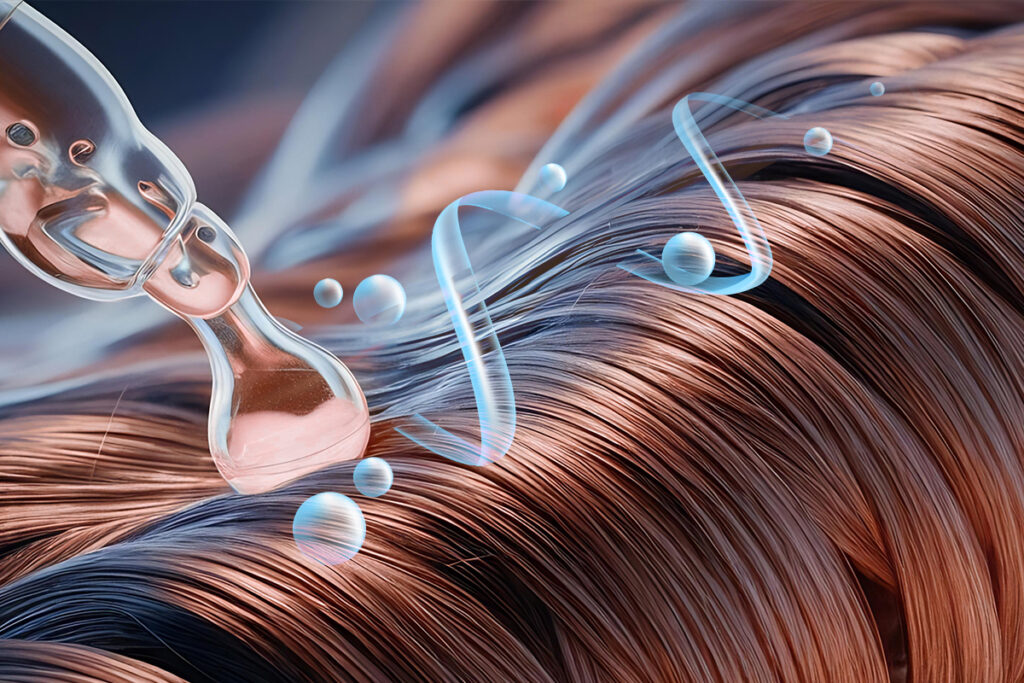
In the context of the skin, peptides act like smart messengers. When you apply a cream containing peptides, these tiny molecules penetrate the skin barrier and deliver specific ‘instructions’ to the cells: ‘produce more collagen’, ‘repair damaged elastin’. It’s like sending a precise text message to every cell with a detailed plan of action.
The problem arises with age. After the age of 25, collagen production declines by around 1% per year. After the menopause, this process accelerates dramatically – the skin loses up to 30% of its collagen within the first five years. This is precisely when peptides become crucial – not as foreign substances, but as a support for the body’s natural regenerative processes.
Four armies of peptides working for your beauty
1. Signalling peptides – the conductors of the orchestra of youth
This is one of the most important groups of peptides for keeping your skin in great condition for a long time. They stimulate fibroblasts – the cells in the dermis responsible for producing collagen, elastin and hyaluronic acid. They act like a personal trainer for your skin, encouraging it to work harder.
Tri- and tetrapeptides are the real stars of this category. As clinical studies show, when used in combination, they can boost collagen synthesis by up to 117% and elastin synthesis by 327%. It is no coincidence that the Pure me brand has incorporated them into its advanced formulas – these peptides truly ‘reset’ and rejuvenate the skin at a molecular level. You will find them in products such as the StimulAGE day cream, the RenewAGE serum and the TimelessAGE day cream.
2. Carrier peptides – the messengers of youth
These peptides transport essential minerals and nutrients to skin cells. The best-known example is copper peptides (GHK-Cu), which occur naturally in the body but decline with age. Copper is a key component in collagen production – without it, fibroblasts cannot effectively synthesise new fibres. Copper peptides act like a ‘taxi’, delivering this element exactly where it is needed.
3. Neurotransmission-inhibiting peptides – “Botox in a jar”
Argireline is the best-known member of this group. This hexapeptide inhibits the release of acetylcholine – the neurotransmitter responsible for facial muscle contractions. The result? Expression lines become less visible, but without the stiffness typically associated with botulinum toxin injections.
4. Enzyme-inhibiting peptides – collagen’s guardians
These peptides act as bodyguards, protecting existing collagen from degradation. They block the action of enzymes such as collagenase and elastase, which break down the skin’s protein structures. The tripeptide composed of lysine, valine and lysine from the Pure me range falls into this very category – not only does it stimulate the production of new collagen (or rather, six different types of it), but it also protects existing collagen.
Six reasons why peptides are the best investment in youth
1. Stimulation of collagen production at the genetic level
Peptides don’t just provide ready-made building blocks – they activate the genes responsible for collagen synthesis. It’s like switching skin cells into ‘high-performance mode’.
2. Selective anti-wrinkle action
Different peptides target different types of wrinkles – expression lines, gravity-induced wrinkles and those caused by photoageing. This is a targeted approach to anti-ageing.
3. Strengthening the skin barrier
Peptides help to replenish ceramides and other components of the hydrolipid barrier, which is essential for maintaining the skin’s youthful appearance.
4. Compatibility with other ingredients
Unlike some active ingredients, peptides work very well with vitamin C, retinoids and acids – they can be combined without any risk of adverse interactions.
5. Mild action
Peptides are biomimetic ingredients, meaning they are identical to those naturally produced by our skin. They therefore rarely cause irritation, making them the ideal choice for sensitive and mature skin.
6. Cumulative effect
The longer you use peptides, the better the results you get – your skin ‘learns’ to regenerate more effectively.
From beauty salons to home skincare
Peptides did not begin their career in cosmetology, but in aesthetic medicine. For over twenty years, doctors have been using them in professional mesotherapy cocktails, where they are injected directly into the dermis. In this field, peptides have gained a reputation as one of the most effective anti-ageing ingredients. The results of administering such cocktails are spectacular: visible rejuvenation, a reduction in wrinkles and an improvement in skin texture after just a few sessions.
Unlike Botox or dermal fillers, peptides do not block facial expressions or alter facial features – they simply restore the skin’s youthful appearance.
Today, this expertise from beauty salons is finding its way into home skincare products. Although the concentrations are lower for safety reasons, modern delivery technologies enable truly excellent results to be achieved with regular use. The Pure me brand utilises precisely these advanced methods, bringing professional standards to everyday skincare.
How can you use peptide products effectively?
Peptides work best in serums and creams that remain in contact with the skin for an extended period. They won’t be effective in cleansing gels, as peptides need time to penetrate the skin. Apply products containing peptides both in the morning and in the evening – unlike retinoids or acids, they are stable in daylight.
Consistent use is key – peptides work cumulatively, and the first results are usually visible after 4–6 weeks of regular use. Also, remember to apply products in order of consistency, from the lightest to the thickest.
Who are peptides ideal for?
Peptides are a versatile ingredient that works well at any age:
- 30+: Prevention and boosting natural regenerative processes
- 40+: The first signs of ageing, loss of firmness
- 50+: Visible wrinkles, a need for intensive regeneration
- 60+: Comprehensive anti-ageing action, hormonal support
They are particularly recommended for people with sensitive skin who cannot tolerate strong acids or high concentrations of retinoids.
The future of peptides
Today, there are over 600 peptides registered for cosmetic use, and in a few years’ time this figure is set to exceed 1,000. The future belongs to ‘smart peptides’ – intelligent molecules that can adapt to the specific needs of the skin.
Scientists are also working on epigenetic peptides that may influence the expression of genes associated with ageing. This means that, in the future, peptides may not only slow down ageing, but even reverse it at a molecular level.
At Pure me, we are following this research with bated breath, hoping to incorporate it into our products.